

Innovation-Driven, Design-Centric: School Furniture for Creating High-Efficiency Learning Spaces
Release time:
2024-12-24 13:51
Views:
In the modern educational landscape, the design of learning spaces is increasingly recognized as one of the key factors in enhancing both student learning outcomes and teacher instructional quality. While traditional classroom furniture has typically prioritized functionality, shifting educational paradigms have brought the question of how to create learning environments that meet students’ physical needs while fostering their creativity and collaborative spirit into the spotlight for designers and educators alike. In this context, the importance of innovation and thoughtful design has become ever more pronounced.
In the modern educational setting, the design of learning spaces is increasingly recognized as one of the key factors in enhancing both student learning outcomes and teacher instructional quality. While traditional classroom furniture has typically prioritized functionality, shifts in educational philosophy have brought the question of how to create learning environments that meet students’ physical needs while fostering their creativity and collaborative spirit into the spotlight for designers and educators alike. In this context, the importance of innovation and thoughtful design has become ever more pronounced.
I. Innovation-Driven Transformation of Educational Spaces
In the past, school furniture was primarily valued for its sturdiness and durability, often neglecting students’ comfort and flexibility during use. However, as educational approaches have evolved—particularly with the rise of interactive and collaborative learning—traditional furniture can no longer meet the demands of modern education. Innovation has become the driving force behind furniture design, enabling it to adapt to ever‑changing teaching and learning needs.
For example, modern adjustable desks and chairs, modular classroom furniture configurations, and desk designs with built-in storage are all manifestations of innovation. Through thoughtful design, these furnishings not only support extended periods of study but also offer flexible spatial arrangements to accommodate diverse teaching approaches, such as small-group discussions and collaborative projects.
II. Design First: Balancing Comfort and Functionality
In the design of school furniture, comfort and functionality are two indispensable considerations. Well‑designed seats and desks can alleviate physical strain during extended periods of study, enhancing students’ concentration and productivity. Modern student desks and chairs often feature ergonomic designs that can be adjusted to accommodate varying heights, ensuring that students remain comfortable even during prolonged use.
In addition, designers have placed great emphasis on the functionality of school furniture. For example, multifunctional student desks and chairs not only provide ample workspace but also offer storage solutions, helping students maintain a tidy learning environment. Modular desks and chairs can be flexibly reconfigured to suit classroom needs, ensuring that the space maximizes its utility across a variety of teaching activities.
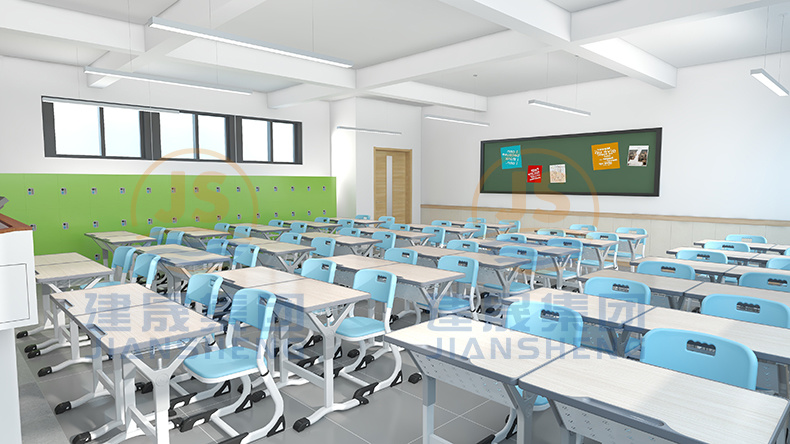
III. Innovative Design Case: Multifunctional Learning Space Furniture
1. Height-Adjustable Desks and Chairs: Modern school furniture increasingly prioritizes student comfort, particularly in settings where students vary significantly in height. Traditional fixed desks and chairs often fail to accommodate all learners. Height-adjustable desks and chairs can be customized to suit each student’s stature, enhancing comfort while helping to prevent health issues caused by poor posture.
2. Modular Classroom Furniture: In recent years, modular furniture has seen increasingly widespread adoption in schools. Its modular design allows desks and chairs to be flexibly configured to meet diverse instructional needs, enabling teachers to adapt the setup according to the requirements of classroom activities. This approach is not only well-suited for traditional lectures but also ideal for group discussions, collaborative projects, and creative pursuits, among other settings.
3. Desks and chairs with storage: Students need to store books, stationery, and other learning materials. Desks and chairs designed with built-in storage not only help students save space but also foster their organizational skills. Storage compartments can be integrated beneath the desk, allowing students to keep their belongings neatly stowed while maintaining a tidy work surface.
IV. Green Environmental Protection and Sustainable Development: New Trends in Educational Furniture
As environmental awareness grows, an increasing number of school furniture designs are prioritizing eco‑friendliness and sustainable development. By using environmentally friendly materials and minimizing the release of harmful substances, these designs not only meet the demands of modern education but also foster healthier learning environments for students. For instance, opting for non‑toxic, eco‑certified wood and coatings, as well as recyclable plastics and metals, are key hallmarks of green design.
Moreover, the sustainability of school furniture is also reflected in its durability and longevity. Designers take into account the service life and recyclability of the furniture during production, striving to provide schools with durable, timeless furnishings that stand the test of time.
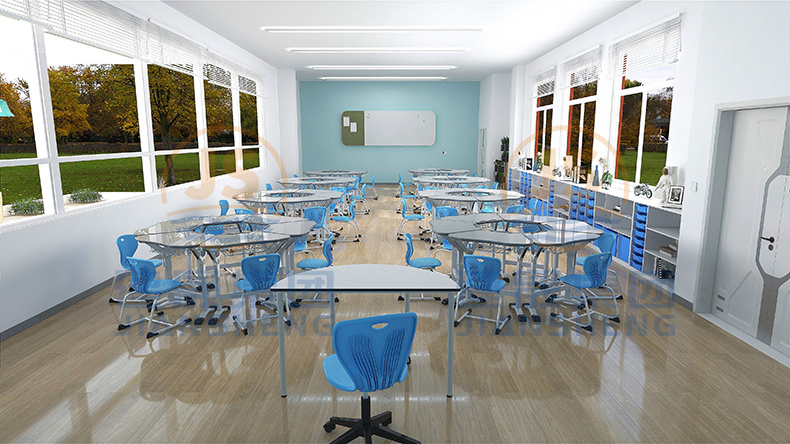
Innovation is the soul of educational space design, while design serves as the vehicle for bringing that innovation to life. In the process of creating high‑efficiency learning spaces, school furniture must not only balance comfort and functionality but also adapt to evolving modern educational philosophies, fostering more flexible and interactive learning environments. Through innovative thinking and meticulous design, school furniture can offer students a more comfortable, more creative learning environment—unlocking their potential and supporting their ongoing growth throughout their academic journey.
Whether it’s adjustable desks and chairs or modular classroom furniture, every piece of school furniture is designed with a deep understanding of educational quality and a precise grasp of students’ needs. In this era that prioritizes innovation and puts design first, the transformation of school furniture not only elevates learning spaces but also lays the groundwork for future educational models.
Established 21 years ago, Jiansheng Group is a global provider of mid-to-high‑end commercial furniture solutions. With education‑furniture as its core business, the company also serves popular segments such as office furniture and healthcare‑and‑senior‑care furnishings. Its industrial park boasts a manufacturing footprint of 150,000 square meters. The group is committed to creating better learning, working, and healthcare environments. Over two decades of entrepreneurship, it has exported to 123 countries and regions and supplied school furniture to the education ministries of more than 30 nations. Its product portfolio includes K‑12 and university student desks and chairs, nap‑time tables and chairs, tiered classroom furniture, smart classroom solutions for higher education, multi‑functional classroom equipment, apartment‑style beds, dining tables and chairs, kindergarten and school furniture, office furniture, and senior‑care furnishings.
School furniture
Related News

News
Winning Project
Beyond Manufacturing: A Showcase of JianSheng Group’s Domestic Project Winning Achievements in 2026
2026-08-24

News
Corporate News
Charitable Education Support | The Nanjing County Charity Federation, in collaboration with Jiansheng Group, has donated a batch of student dormitory beds to Longshan Middle School in Nanjing County.
2026-08-24

Delivery News
Office Furniture
Jiansheng Group | Turnkey Office Furniture Solution Delivery Case for Fujian Kenuo Science and Technology Park
2026-08-20
