

University Lecture Hall Stools — A New Experience in Tiered Classrooms, and the Path to Upgrading High School Auditorium Seating
Release time:
2025-06-12 15:20
Views:
As educational philosophies continue to evolve and teaching methods innovate, the design of university and high school classrooms is steadily being upgraded. Traditional classroom seating arrangements can no longer fully meet the demands of modern education, particularly in response to the growing emphasis on interactive teaching, team collaboration, and increased student engagement. As a modern seating solution, tiered chairs have gradually gained widespread adoption in university lecture halls and high school auditoriums, becoming an essential component for enhancing classroom layouts and overall learning experiences. This article explores the design principles and functional advantages of tiered chairs in higher education, as well as strategies for effectively upgrading seating in high school auditoriums, with the goal of providing students with a more comfortable and efficient learning environment. I. Design Principles of Tiered Chairs Originally used in lecture halls, auditoriums, and large conference rooms, tiered chairs have seen increasingly broad application in university and high school classrooms in recent years. Unlike conventional desks and chairs, tiered chairs are typically arranged in a sloping configuration, with seats rising progressively from front to back. This design ensures that each row enjoys an unobstructed view, free from the visual barriers created by rows ahead. Such a layout not only enhances students’ visual comfort but also fosters greater classroom interaction. 1. Optimizing Visual Access The tiered design enables students to avoid obstructed views caused by taller seats in front, ensuring clear sightlines across all rows.
As educational philosophies continue to evolve and teaching models innovate, the design of university and high school classrooms is steadily being upgraded. Traditional classroom seating arrangements can no longer fully meet the demands of modern instruction, particularly in response to the growing emphasis on interactive learning, team collaboration, and enhanced student engagement. As a contemporary seating solution, tiered chairs have increasingly been adopted in university lecture halls and high school auditoriums, becoming an integral component of improved classroom layouts and enhanced learning experiences.
This article will examine the design philosophy and functional advantages of tiered seating in higher education institutions, as well as strategies for effectively upgrading auditorium seating in high schools, with the aim of providing students with a more comfortable and efficient learning experience.
I. Design Philosophy of the Step Stool
In the past, tiered seating was primarily used in lecture halls, auditoriums, and large conference rooms; in recent years, its adoption has expanded significantly in university and high school classrooms. Unlike conventional desks and chairs, tiered seating is typically arranged in a sloping configuration, with seats gradually rising from front to back, ensuring that each row enjoys an unobstructed view of the stage or screen. This design not only enhances students’ visual comfort but also fosters greater classroom engagement.
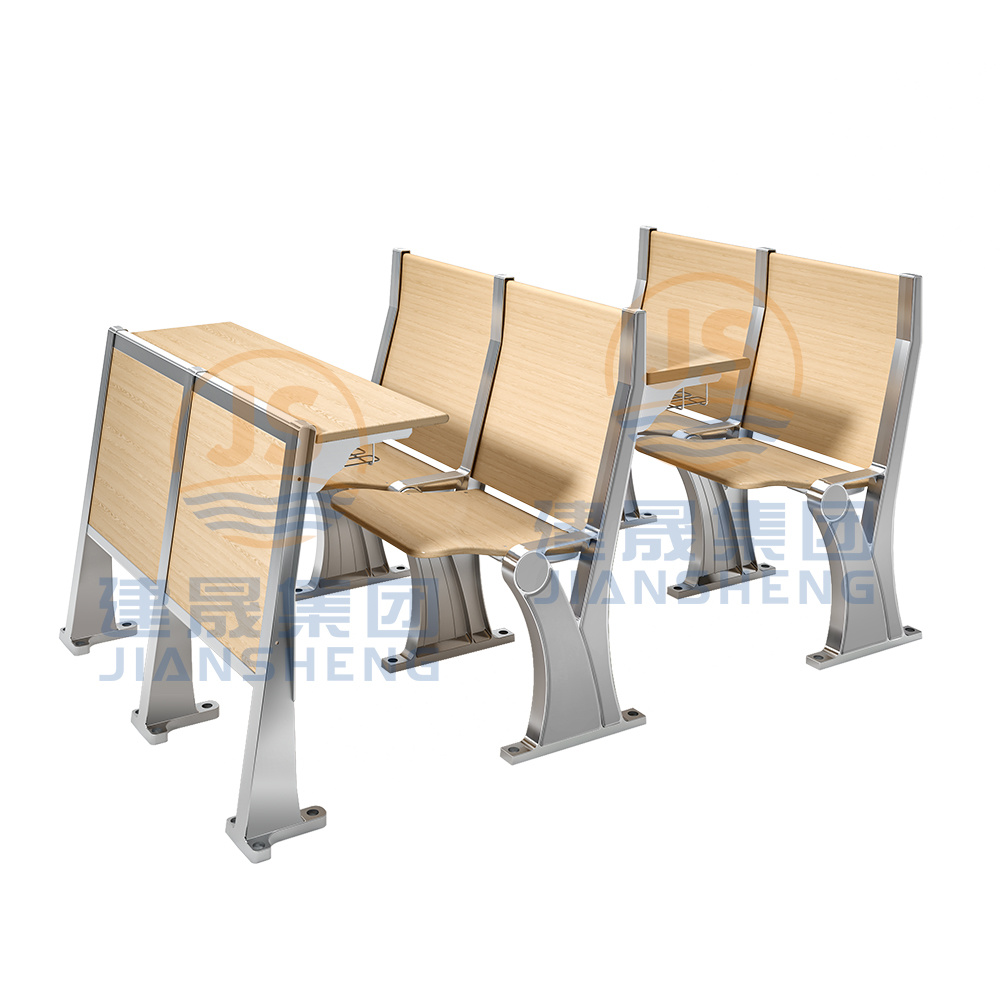
1. Optimize visual effects
The tiered design ensures that students are not obstructed by the tall seats in the front rows, allowing each student to clearly see the podium and the projection equipment—crucial for classroom interaction and effective information delivery.
2. Maximization of space utilization
The tiered seating arrangement makes efficient use of classroom space, eliminating the overcrowding and discomfort associated with traditional classroom layouts and ensuring that each student has ample room for learning and interaction.
3. Enhance student concentration
Thanks to clear visibility and the relative independence of each seat, students’ concentration in class has improved, which helps enhance classroom efficiency.
II. Functional Advantages of Tiered University Chairs
1. Comfort and Ergonomic Design
Modern step stools are designed with ergonomics in mind, with carefully calibrated seat height, depth, and tilt to ensure a comfortable sitting experience. Students who sit for extended periods during lectures can reduce physical fatigue, thereby enhancing their concentration in class.
2. Flexible seating configuration
Step‑up seating typically features a flexible seating configuration that can be quickly reconfigured to meet the needs of various settings. For lecture halls, auditoriums, or classrooms of different sizes, faculty and administrators can easily rearrange the seats to accommodate diverse event formats and varying participant numbers.
3. Convenient integration of electrical and multimedia devices
Modern step stools not only offer the basic functions of traditional seating but often come equipped with USB charging ports, outlets, and other electrical features. For university and high school students, the demands of extended study sessions frequently require the use of electronic devices; integrated power ports make it easier to power laptops, tablets, and other gadgets during class, thereby enhancing classroom learning efficiency.

4. Emphasize the aesthetic appeal of the seats and their integration with the surrounding environment.
As a public space that accommodates lectures, meetings, and performances, the design of auditorium seating must balance functionality with harmonious integration into the overall environment. The materials, colors, and styles of tiered seating can be tailored to align with the institution’s overarching design aesthetic, enhancing both the visual appeal and the ambient atmosphere of the auditorium.
The introduction of tiered seating has brought a whole new experience to university and high school classrooms. With thoughtful design and layout, it not only enhances classroom comfort but also boosts interactivity and maximizes space utilization. In particular, in settings such as high school auditoriums, upgrading and renovating the seating can deliver a higher‑quality viewing and learning experience for students and audiences alike. As educational needs continue to evolve, the functionality of tiered seating will become increasingly diverse, and future learning environments will place even greater emphasis on student experience and classroom engagement.
Founded in 2003, Jiansheng Group is a global provider of mid-to-high‑end commercial furniture solutions. With education furniture at its core, the company also serves popular segments such as office and healthcare‑and‑elderly‑care furniture. Its industrial park boasts a manufacturing area of 150,000 square meters. The group is committed to creating better learning, working, and healthcare environments. Over its 22 years of operation, it has exported to 132 countries and regions and supplied school furniture to the education ministries of more than 30 nations. Its main product lines include K‑12 and university student desks and chairs, nap‑time tables and chairs, tiered classroom furniture, smart classroom solutions for higher education, multi‑functional classroom furnishings, apartment beds, dining tables and chairs, kindergarten and school furniture, library furniture, office furniture, and senior‑care furniture.
University tiered seating
Related News

News
Winning Project
Beyond Manufacturing: A Showcase of JianSheng Group’s Domestic Project Winning Achievements in 2026
2026-08-24

News
Corporate News
Charitable Education Support | The Nanjing County Charity Federation, in collaboration with Jiansheng Group, has donated a batch of student dormitory beds to Longshan Middle School in Nanjing County.
2026-08-24

Delivery News
Office Furniture
Jiansheng Group | Turnkey Office Furniture Solution Delivery Case for Fujian Kenuo Science and Technology Park
2026-08-20
